
The Train Keeps Moving While the War Follows
From Dnipro’s shelters to Kyiv’s testimonies, Ukraine lives between captivity, memory and the next siren

Reading time: 11–13 minutes
Credit: Based on reporting and testimony by Shaun Pinner in Voices from the Front, May 25, 2026.
Shaun Pinner at the moment of his exchange from Russian captivity in Saudi Arabia, 2022, weighing under 60 kilograms. He raised the question of foreign volunteers held by Russia directly with Lubinets at the conference.
Ukraine’s war is often described through maps, frontlines and strike counts.
But sometimes the clearest understanding comes from a train platform.
From people being ordered off a train because drones are approaching the station.
From families carrying children underground without panic because everybody already knows the routine.
From former prisoners describing torture beneath the shadow of Kyiv’s towering Motherland Monument while, outside, another missile attack is already beginning to form.
What Shaun Pinner describes is not simply movement through a country at war. It is a country where war now travels with everyday life itself.
On the morning of 21 May, Shaun Pinner boarded a train in Dnipro under air raid alerts, with reports of Shahed drones in the vicinity of the station. Passengers were ordered off the platform and into underground shelters before the journey could begin. By evening, he was in Kyiv. By the following night, the capital was absorbing one of the largest aerial assaults seen in recent months.
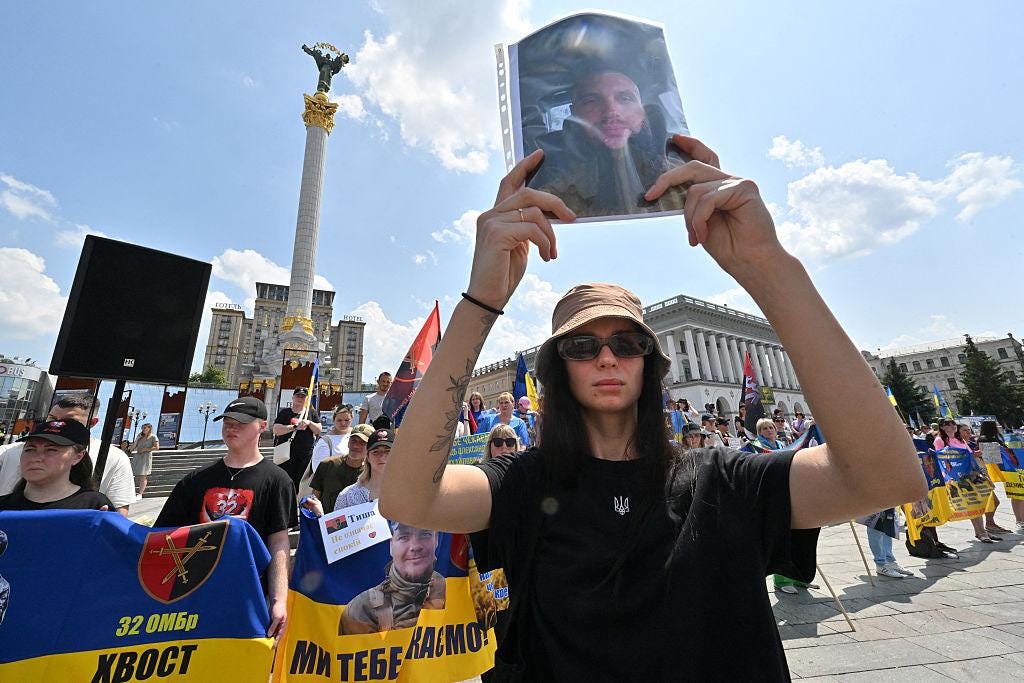
Many of the people at the square are relatives of soldiers who have either been killed or missing in action.
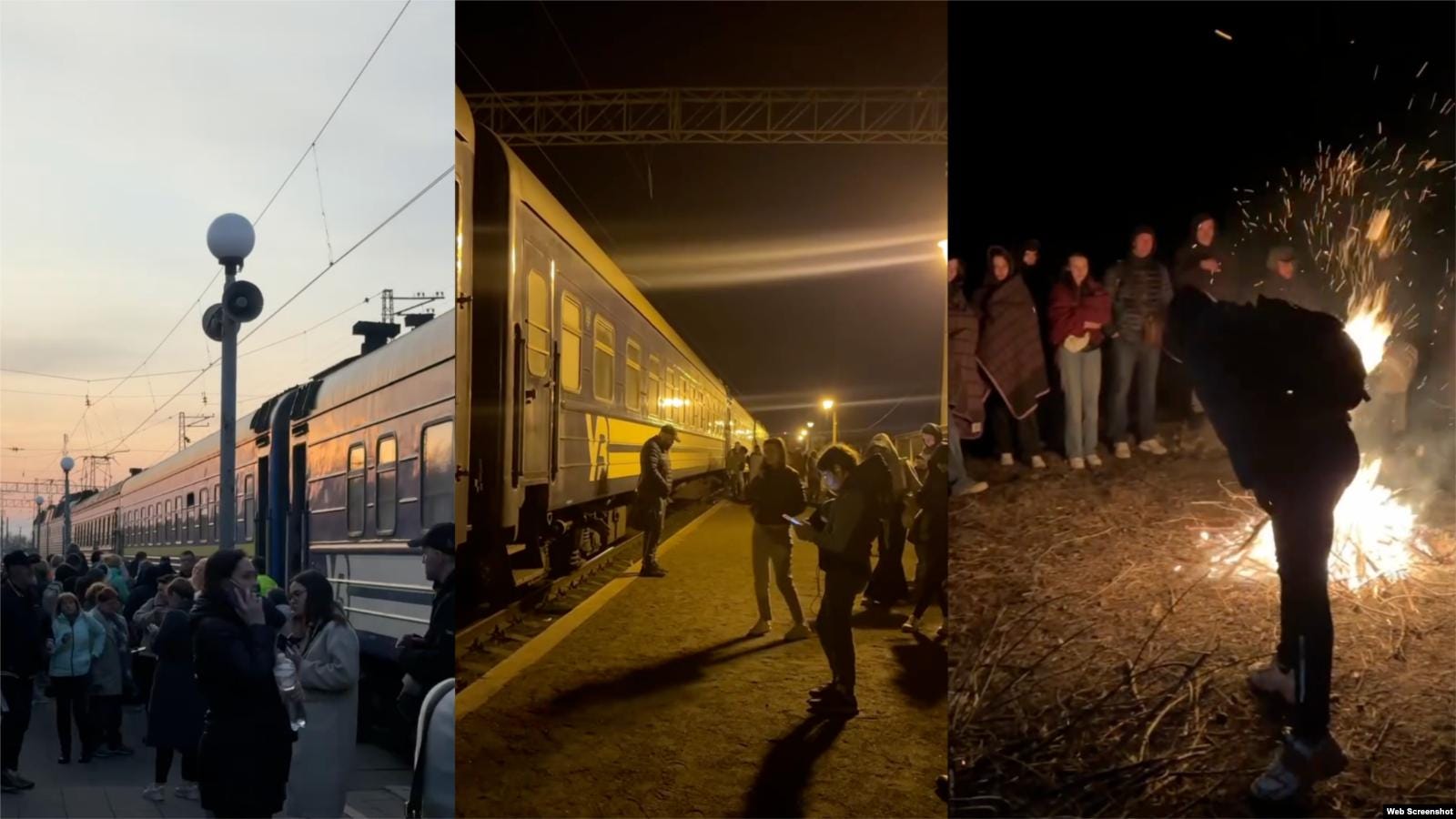
The passengers have left the train due to the drone danger. They are getting back on and continuing their journey.
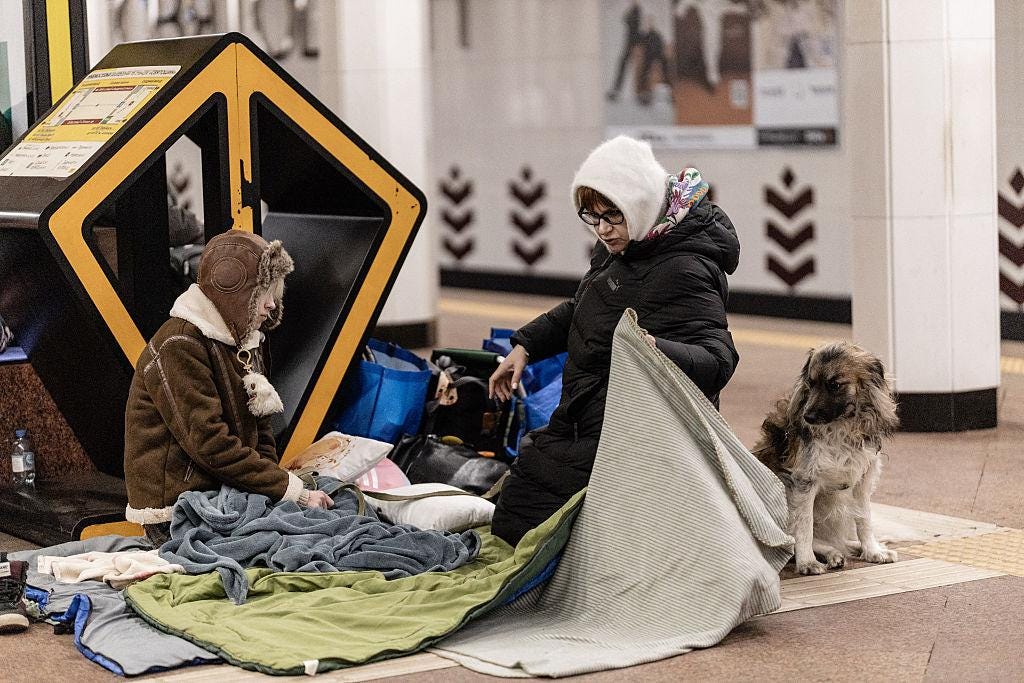
In shelter
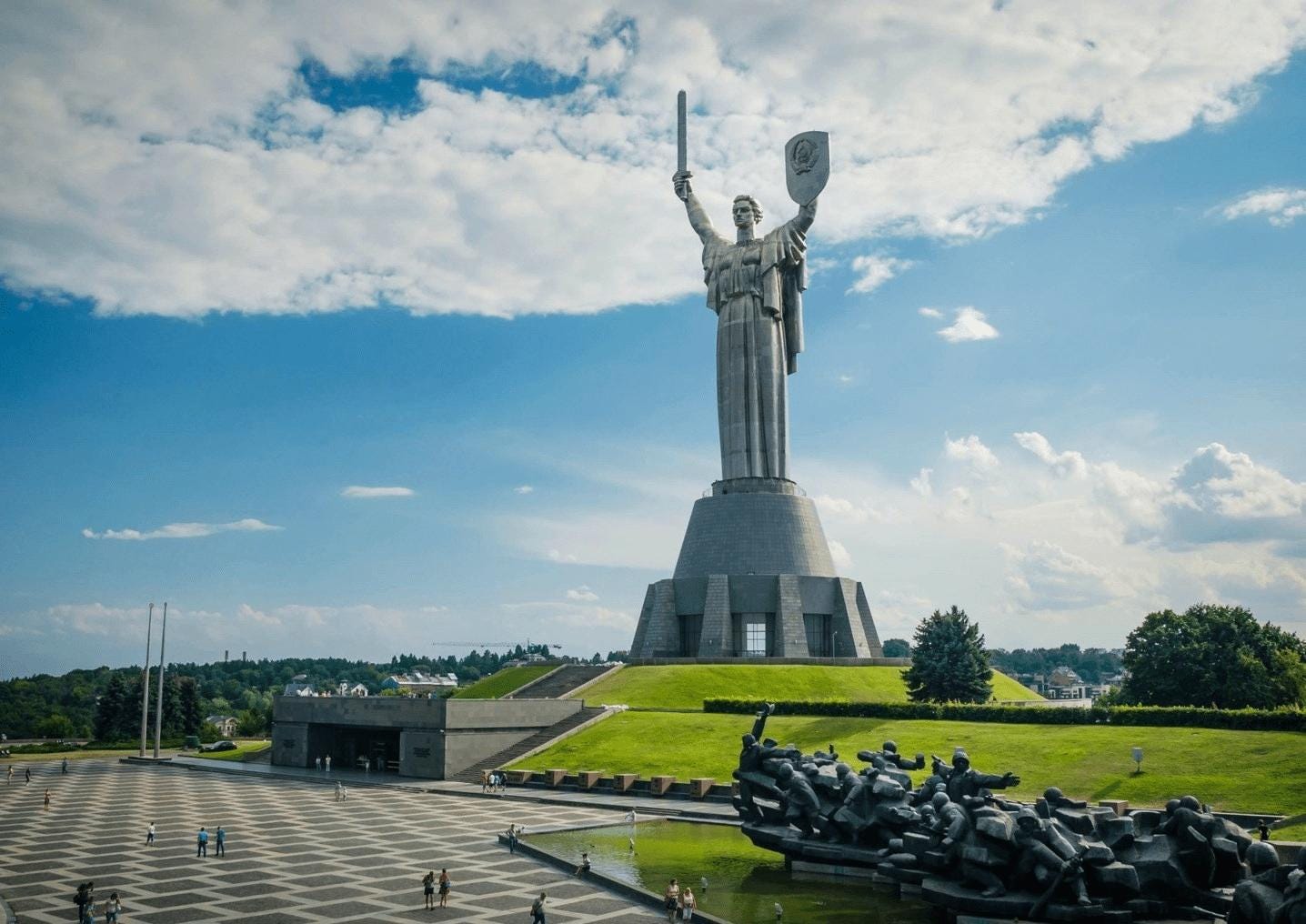
The Motherland Monument towers over Kyiv's War Museum, where survivors of Russian captivity testified about systematic torture on 23 May 2026. Hours later, the city was under missile attack.
The conference itself took place beneath Motherland Monument at Kyiv’s War Museum. That location matters. The monument was originally built during the Soviet period as a symbol of victory and endurance.
The conference “Made in Russia, Delivered into Captivity” gathered former prisoners, officials, investigators and families beneath one of Kyiv’s most recognisable landmarks.
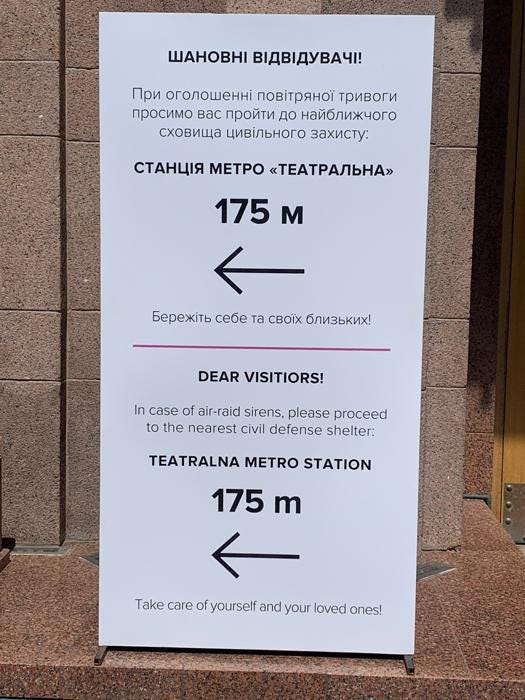
Kyiv and Dnipro continue functioning under permanent pressure. Trains run, cafés remain open, commuters cross the river, and air raid alerts interrupt everything without warning.
The Journey Already Begins Underground
The article begins in Dnipro with explosions overhead and drone alerts near the railway station.
Passengers board.
Passengers disembark.
People move underground.
Then the journey resumes.
There is something important in that sequence because it explains how wartime behaviour changes over time. Panic disappears first. Ritual replaces it. People stop asking whether danger exists and begin calculating how to move around it.
Power banks become essential equipment. Telegram alert channels become part of travel planning. Railway timetables are checked alongside missile warnings.
The war enters ordinary movement.
Not dramatically.
Persistently.
That tension runs through Shaun’s entire piece. Ukraine is not frozen by war. Ukraine keeps functioning while adapting around it.
That may be one of the country’s greatest strengths.
“The frontline may sit hundreds of kilometres away, but the war itself stretches into every city, every railway station, every interrupted night’s sleep.”
Beneath the Motherland Monument
The conference itself took place beneath Motherland Monument at Kyiv’s War Museum.
That location matters.
The monument was originally built during the Soviet period as a symbol of victory and endurance.
Now it watches over testimonies describing Russian captivity, torture and psychological abuse inflicted on Ukrainians.
History did not disappear there.
It changed direction.
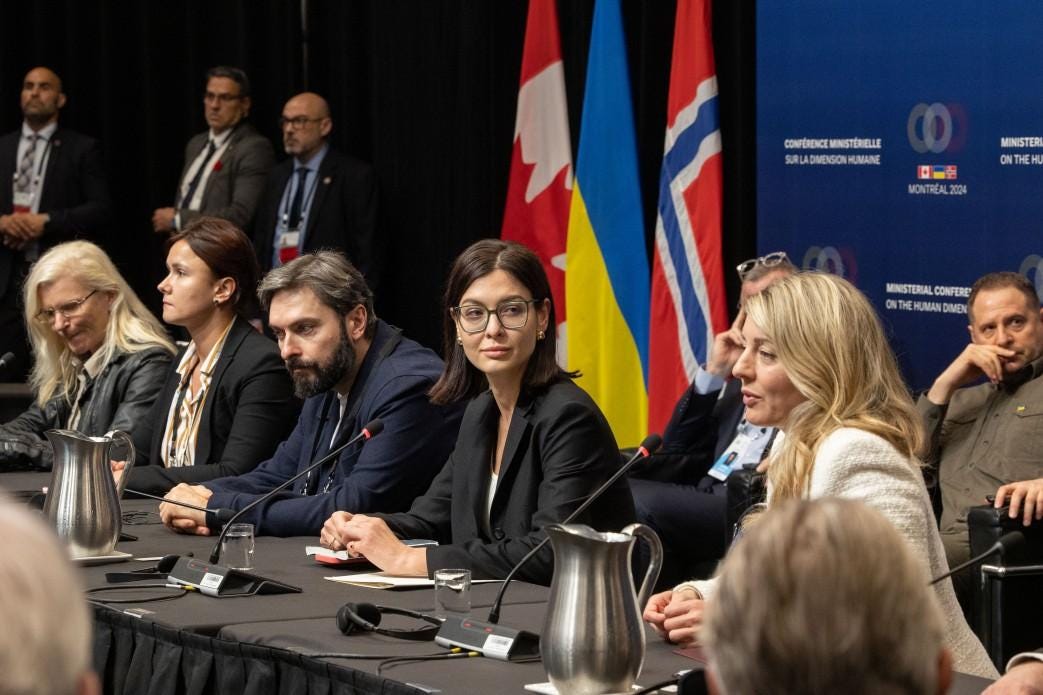
The Ministerial Conference on the Human Dimension of the Peace Formula, which took place in Montreal in October 2024. The conference focused on sharing testimonies from Ukrainians who have returned from deportation and Russian captivity. Participants heard stories directly from victims of the aggression, including former prisoners of war and volunteers. The event was moderated by Daria Zarivna, Advisor to the Head of the Presidential Administration of Ukraine.
“Made in Russia, Delivered into Captivity”
The conference was held beneath the Motherland Monument at Kyiv’s War Museum — a setting that managed to be both monumental and precise. Around the table were former prisoners of war, human rights investigators, Ukrainian officials, representatives from the UN Human Rights Monitoring Mission, members of the Security Service of Ukraine, and families still searching for loved ones held somewhere inside Russia or occupied territory.
The subject was the systematic torture of Ukrainian prisoners of war.
According to figures presented at the conference, between 90 and 95 per cent of released Ukrainian POWs report experiencing torture or cruel treatment during captivity. Ukrainian officials have documented over 600 recognised forms of abuse applied across the Russian detention system — beatings, electric shocks, starvation, sexual violence, denial of medical care, prolonged psychological pressure and fabricated criminal proceedings. More than 2,100 Ukrainian POWs have been illegally sentenced through Russian courts. At least 149 have been tortured to death.
What distinguished the testimony, across case after case from entirely different facilities hundreds or thousands of kilometres apart, was not the violence itself but its consistency. The same methods, the same sequences, the same patterns — repeated by survivors who had never met and could not have coordinated their accounts. One former prisoner described a barber at a detention facility who routinely sliced skin from prisoners’ scalps during head shaves, triggering beatings for those who reacted. It was not described as aberrant behaviour. It was described as routine.
That consistency points in one direction. Not towards individual cruelty, not towards rogue guards or poorly supervised facilities, but towards a coordinated system operating across multiple detention centres throughout Russia and occupied Ukraine.
The Behaviour Repeats Across Different Prisons
One of the most important observations in Shaun Pinner’s account is not simply the brutality itself.
It is repetition.
Different prisons.
Different guards.
Different regions.
The same behaviour.
Former prisoners described electric shocks, starvation, humiliation, beatings, psychological pressure and denial of medical care.
Witnesses spoke about methods appearing again and again across facilities separated by enormous distances.
That repetition matters because it changes the discussion.
This stops looking like isolated cruelty.
It begins looking organised.
Pinner understands this differently from most journalists covering the event because he himself survived Russian captivity after the fall of Mariupol. He is not listening as an observer standing outside the experience. He is mentally recognising methods used against him personally.
That gives the article unusual weight.
Not rhetorical weight.
Experiential weight.
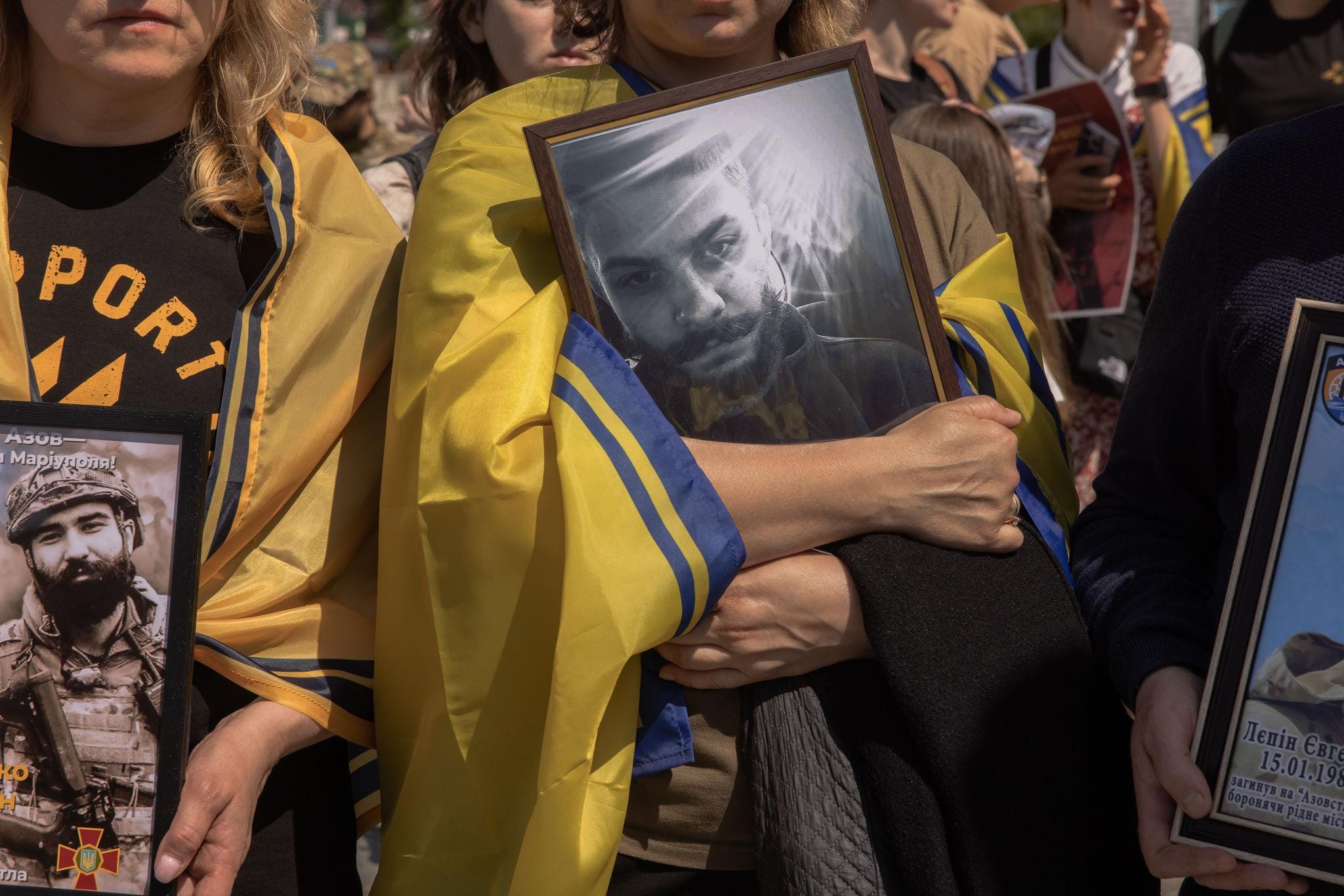
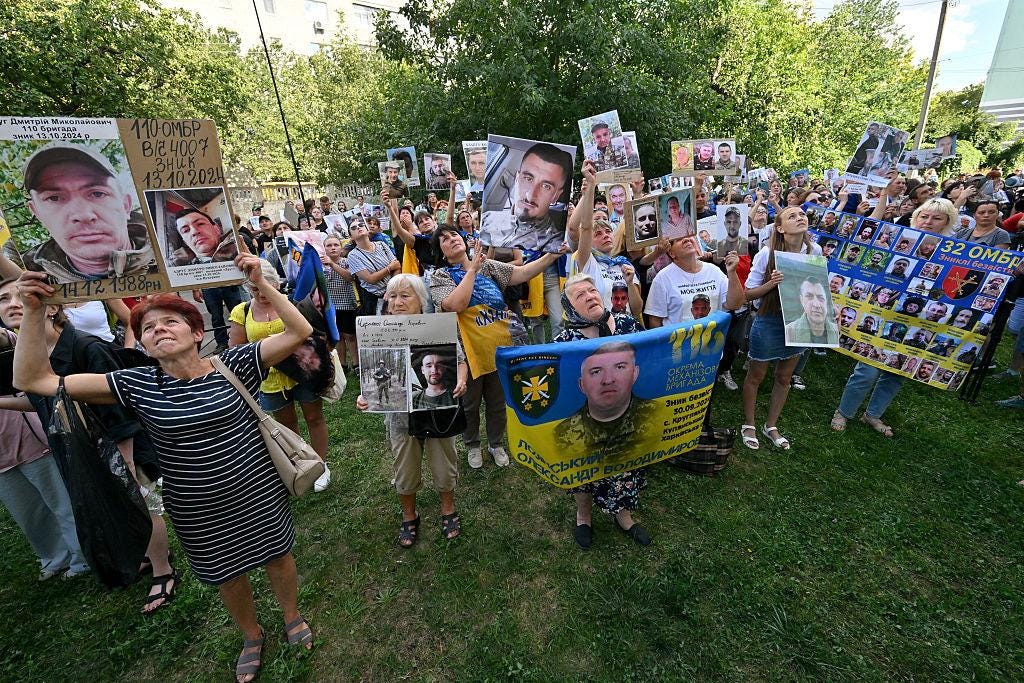
Families of prisoners and former captives continue pushing for international attention as evidence accumulates across multiple detention facilities.
When Humiliation Becomes Routine
One testimony described prisoners having
parts of their scalp deliberately cut during forced haircuts before being beaten for reacting in pain.
The detail is horrifying.
But what makes it worse is the normality surrounding it.
The cruelty is procedural.
Predictable.
Repeated.
That is where the article becomes deeply unsettling. Torture is not presented as uncontrolled rage. It is described as organised behaviour designed to produce submission, humiliation and fear.
Even small acts become instruments of control.
A haircut becomes punishment.
Medical neglect becomes pressure.
Isolation becomes psychological conditioning.
This is why so many former prisoners describe Russian captivity less as imprisonment and more as deliberate dehumanisation.
“The most disturbing part was not the violence alone, but how organised and routine it sounded.”
Foreign Volunteers Remain Exposed
One of the strongest parts of the piece concerns foreign volunteers captured while legally serving inside Ukrainian formations.
This subject rarely receives sustained international attention.
Pinner asked Ukrainian Human Rights Commissioner Dmytro Lubinets what real protections exist when Russia refuses meaningful access to humanitarian organisations, observers or consular officials.
The answer was uncomfortable precisely because it was honest.
Very little exists beyond pressure, documentation and publicity.
That matters because foreign volunteers have repeatedly been used for propaganda purposes by Moscow. Their nationality increases their political value. Their visibility becomes leverage.
The implication is difficult to avoid: the less public attention these prisoners receive, the more vulnerable they become.
The question of foreign volunteers
Pinner — himself exchanged from Russian captivity in 2022, weighing under 60 kilograms at the point of release — used the opportunity to raise a question that rarely surfaces in formal settings: the status of foreign volunteers and servicemen held by Russia who were not born in Ukraine.
The issue is legally and politically complicated. Russia frequently refuses to recognise such individuals as legitimate prisoners of war despite their lawful service within Ukrainian formations. British nationals in particular have been singled out for propaganda purposes and used as instruments of political leverage. Humanitarian organisations, international observers and consular representatives have repeatedly been denied meaningful access.
The answer offered at the conference was uncomfortable in its honesty. In practical terms, when Russia denies access and refuses to engage, the available mechanisms are limited. Continued diplomatic pressure, public documentation and legal accountability processes represent, in many cases, the primary tools remaining.
That is a significant gap between the language of international humanitarian law and the reality of its enforcement — a gap Russia has exploited consistently throughout the war.
Kyiv Between Conferences and Missile Warnings
The article’s final movement returns to a pattern Ukrainians know too well.
Discussion by day.
Missiles by night.
Warnings began circulating while the conference was still ongoing. Hours later, Russia launched one of the largest aerial assaults on Kyiv seen in recent months.
That timing matters symbolically.
Inside the conference hall, survivors described torture, captivity and violations of international law.
Outside, the city prepared for another mass attack.
The separation between battlefield and civilian life has almost vanished.
And yet Kyiv continues functioning.
That may be the defining reality of modern Ukraine.
Not fearlessness.
Endurance.
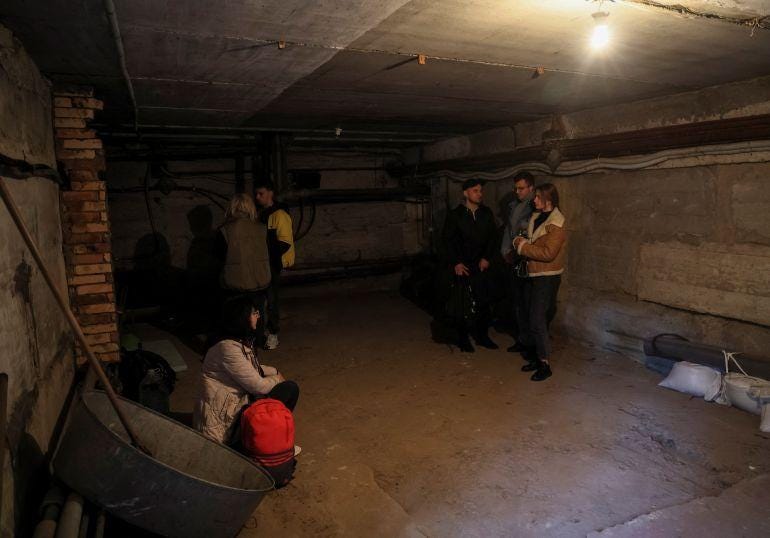
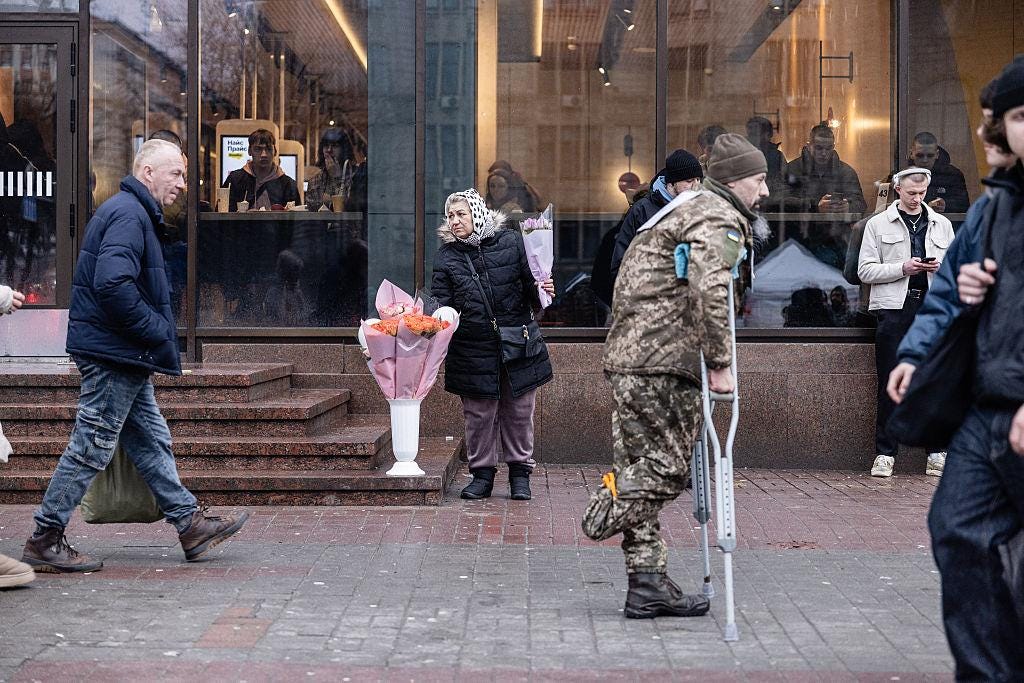
Even while conferences, cafés and daily life continue, missile alerts remain part of the rhythm of Ukrainian cities.
The War Travels Everywhere
The most powerful line in the article may be the simplest:
Ukraine continues moving.
That sentence carries enormous weight after everything described beforehand.
Because movement itself has become resistance.
Trains still depart.
People still gather.
Witnesses still testify.
Families still wait.
Journalists still travel across the country documenting what others would prefer hidden.
The war reaches into stations, shelters, museums, apartment blocks and sleepless nights.
But Ukraine keeps moving anyway.
That may ultimately be what Russia has failed to break.
CTA — Suggested Reading
If you want to continue reading about pressure, captivity, memory and the wider behaviour surrounding Russia’s war against Ukraine, you may also find these pieces relevant:


You may like to look into my archive of previous articles:

Reflexions
One detail stays behind after reading Shaun Pinner’s piece.
Not the missiles.
Not even the torture itself.
It is the train.
People boarding.
People leaving the platform for shelter.
People returning calmly afterwards because the journey still has to continue.
That may be the deepest change long wars produce. Extraordinary danger slowly becomes folded into ordinary movement.
And yet Shaun’s article also shows something else.
Russia can strike cities.
Russia can brutalise prisoners.
Russia can force entire populations underground at night.
But it still has not stopped Ukraine from functioning as a society.
That matters more than many realise.
Because endurance is not passive.
It is active behaviour repeated every day.
Ending
From Dnipro shelters to Kyiv testimonies, Shaun Pinner describes a country where war follows daily life everywhere.
Former POWs spoke beneath the Motherland Monument. Hours later, missiles struck Kyiv again.
Ukraine keeps moving anyway.
Ukraine continues moving.
And as long as it does, the story is not finished.
It’s free
However, if you find reason to support my research - I would be grateful for any contribution in the range of: 2 to 8 $.
If you want to contribute you should upgrade to paid when you have pressed the Subscribe button. Then the pledge window should open. I have added new buttons you can try. I have had some challenges navigating Substack. So please let me know if it is not working.
However, there are no restrictions. Everything is free and public.
Please do me the favour to restack.
…that’s what sustained my peoples identity throughout horrible soviet repression - humility and intelligence, finally Ukrainians, the largest nation in europe, which americans had no idea about ten years ago, getting recognition they deserved, i have never lived in a country called Ukraine, left in 1988, but never doubt in this amazing talented and peaceful nation, Ukrainian flag represents no “historical conquest written by blood” not because they do not fight, they have a colorful history of fighting for their identity, but they have chosen blue sky and yellow fields of sunflowers as their national flag, you don’t have to announce and project your might to the world to identify yourself as people, you just have to LOVE TO LIVE YOUR LIFE
…СЛАВА УКРАЇНІ 💛💙🇺🇦!