
Putin Keeps Repeating the Same Demands While the War Changes Around Him
Ukraine has offered talks, a ceasefire and humanitarian exchanges. Moscow continues to answer with the same war. The gap between ambition and reality keeps widening.

Reading time: 8–10 minutes
Credit: Based on reporting and commentary by Shaun Pinner, Voices from the Front, 8 June 2026.
Introduction
Wars often change the people who start them.
Objectives shrink.
Expectations adjust.
Leaders look for exits that preserve what remains.
What stands out in Russia’s war against Ukraine is how little the Kremlin’s public language has changed.
Ukraine has offered negotiations.
President Zelensky has proposed a ceasefire during talks.
Humanitarian exchanges remain on the table.
Yet Moscow continues to return to the same phrases heard in February 2022: “demilitarisation”, “denazification”, and the claim that Russia is protecting Russian speakers.
The battlefield has changed. The map has changed. The cost has changed.
The language has not.
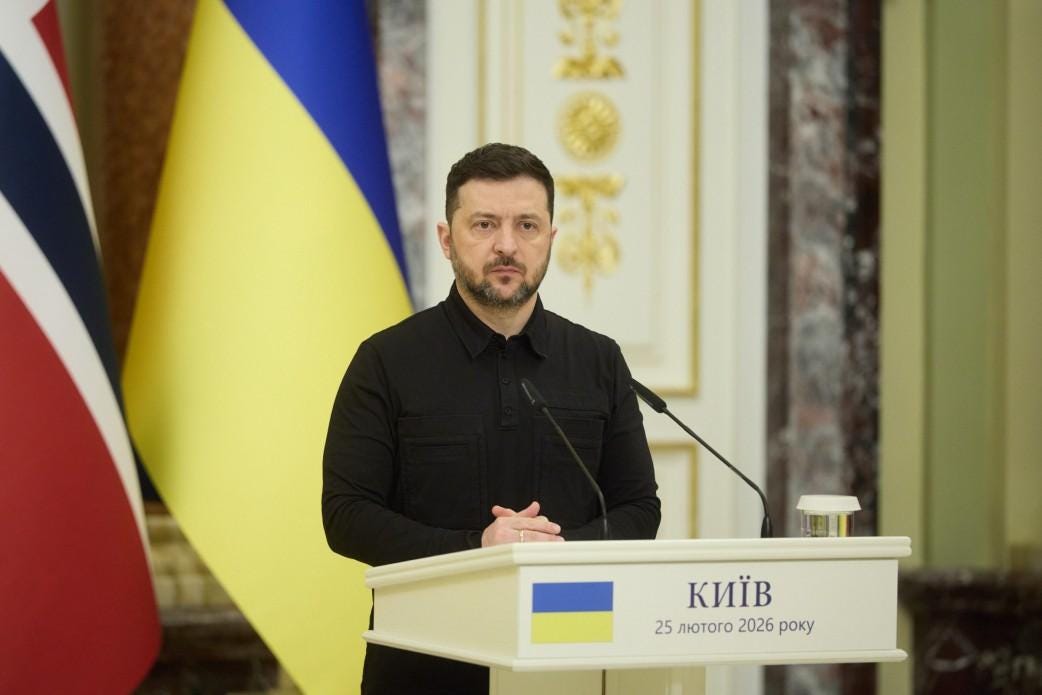
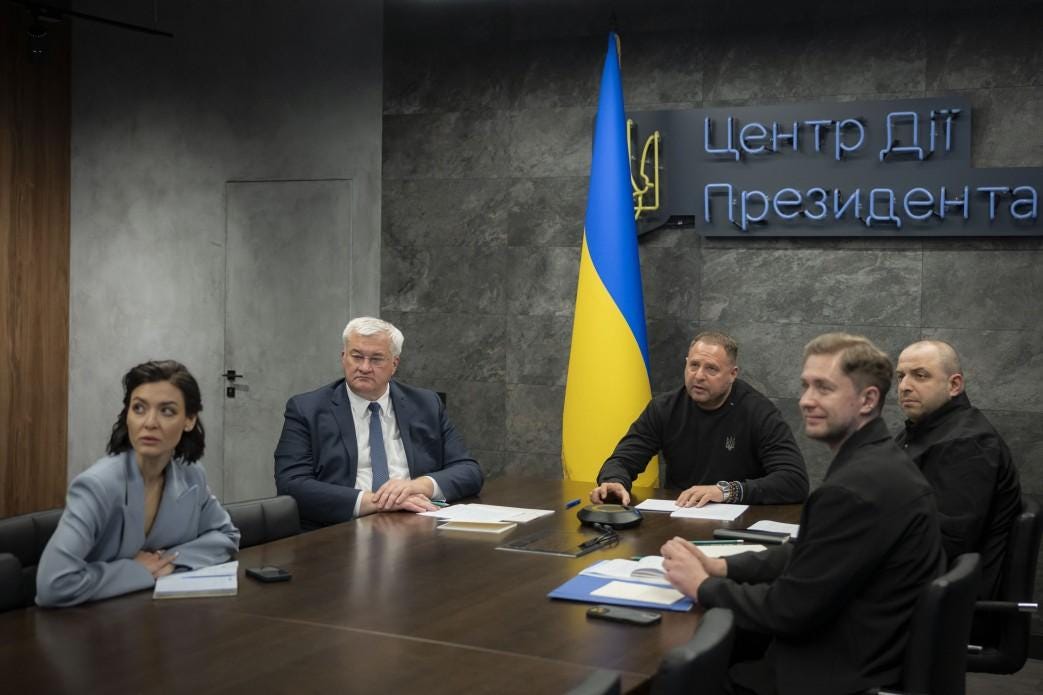
A meeting at the presidential office in Ukraine,
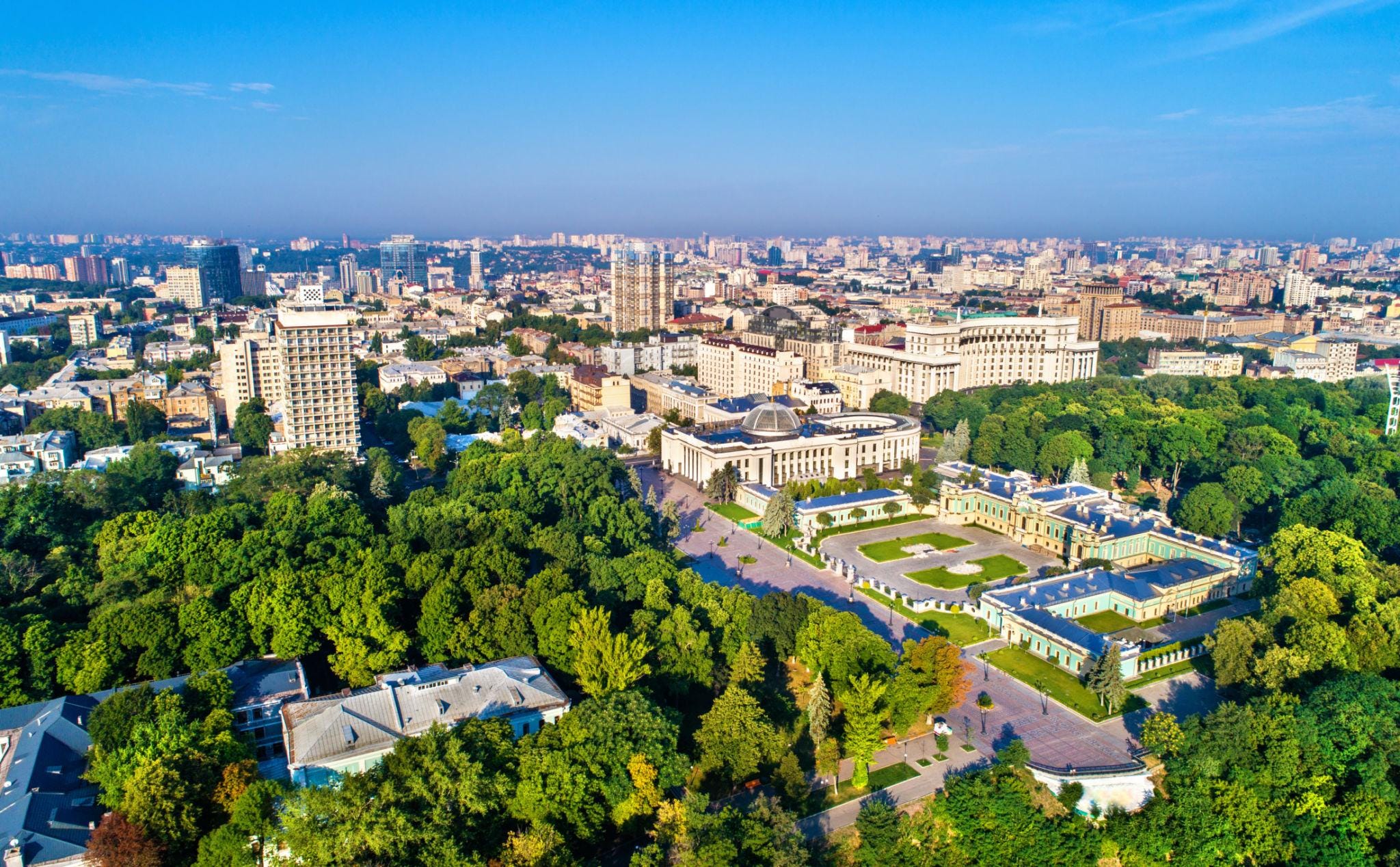
Aerial photography of the government district in Kyiv
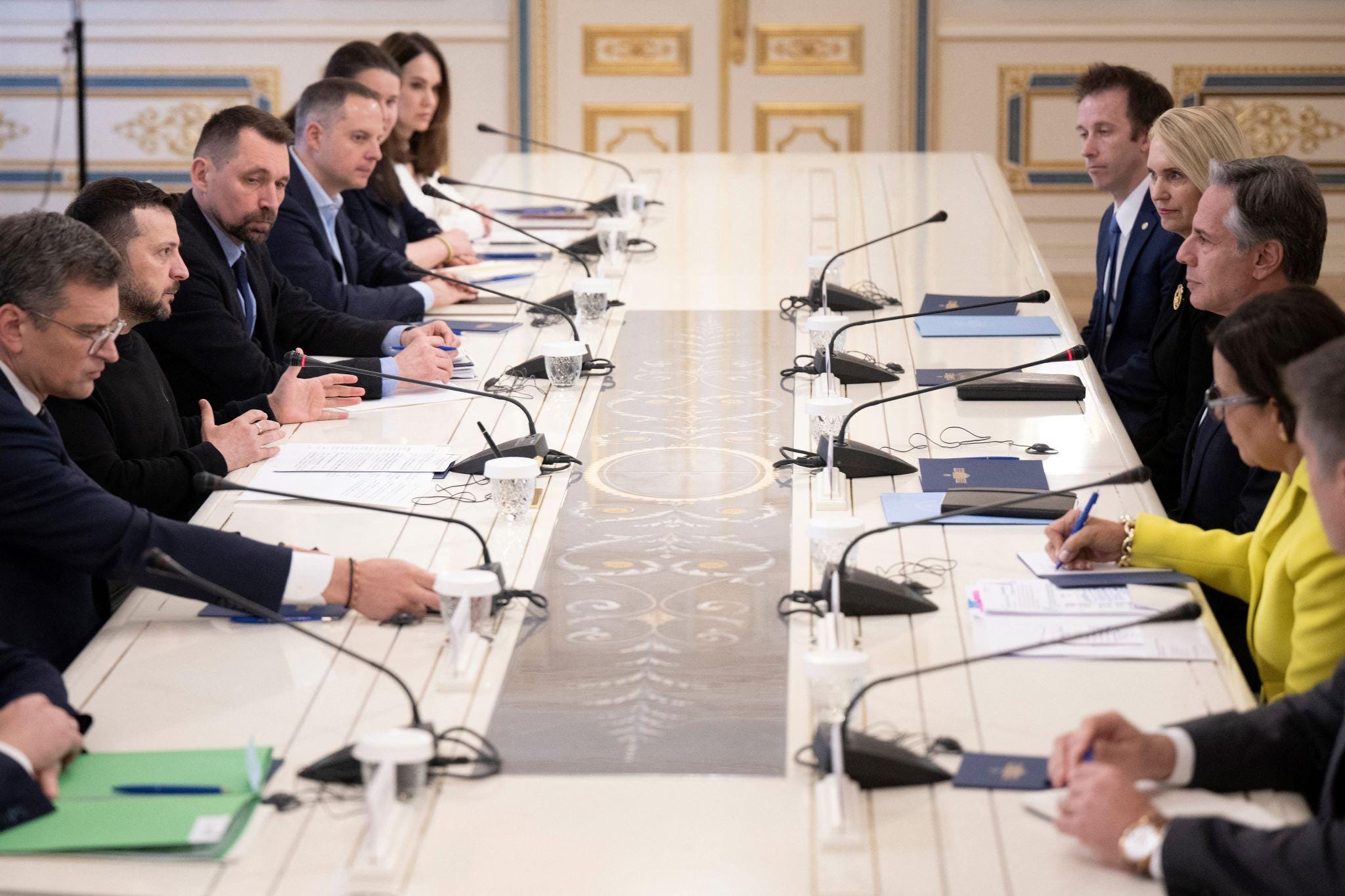
Zelenskiy lauds U.S. aid package, asks Blinken for air defences
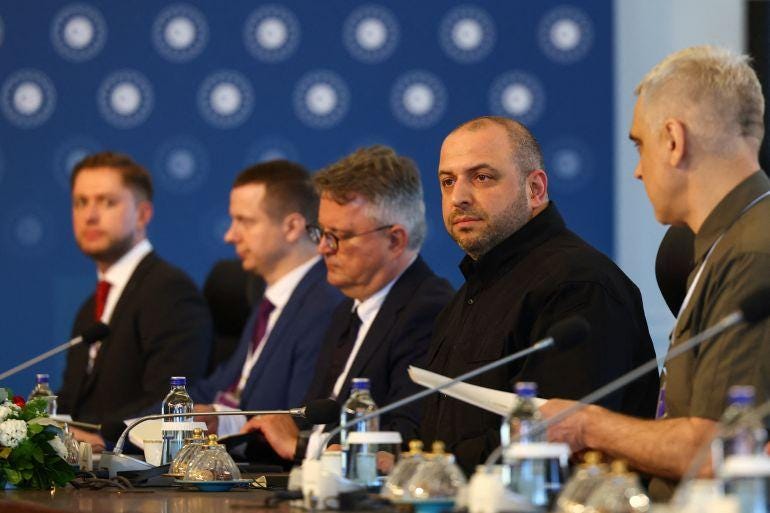
The Ukrainian delegation, led by Defense Minister Rustem Umerov, during peace talks in Istanbul
Ukraine’s latest proposal did not offer surrender. It offered a process: talks, a ceasefire during negotiations, and humanitarian measures.
Ukraine Offered a Way to Pause the War
According to Shaun Pinner’s account, Zelensky’s June proposal contained several elements that many diplomatic initiatives normally begin with:
Direct talks between leaders.
A temporary ceasefire during negotiations.
Prisoner exchanges.
The return of civilians and children taken from occupied territory.
International involvement and monitoring.
The proposal did not settle the war.
It simply attempted to create conditions where settlement might become possible.
That distinction matters.
A ceasefire is not peace. It is often the first step towards discovering whether peace is even possible.
“The proposal did not demand surrender. It offered a process.”
Moscow Answered With Familiar Language
The Kremlin rejected the offer.
Instead, Russian officials again referred to the so-called “root causes” of the war.
That phrase has become one of the most revealing expressions in Russian official language.
When Moscow speaks about “root causes”, it is rarely discussing battlefield realities. It is usually referring to broader political goals:
Limiting Ukraine’s military freedom.
Restricting Ukraine’s political choices.
Securing recognition of territorial gains.
Preserving Russian influence over Ukraine’s future direction.
The problem is that these aims are not compatible with Ukraine’s understanding of sovereignty.
The two sides are not merely disagreeing about territory.
They continue to disagree about whether Ukraine has the right to make its own choices.
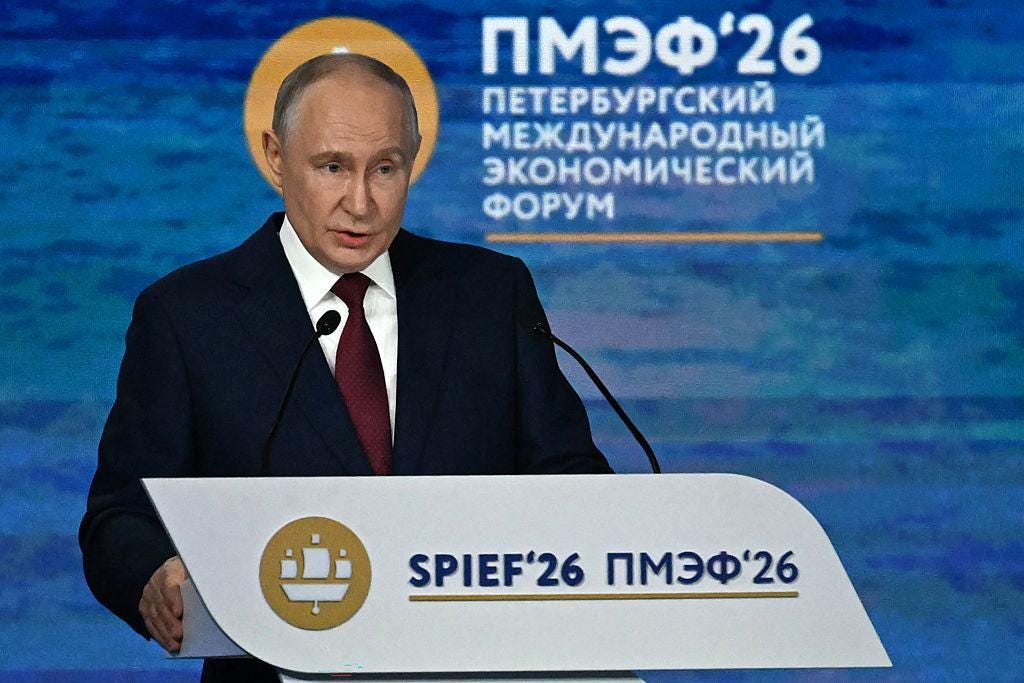
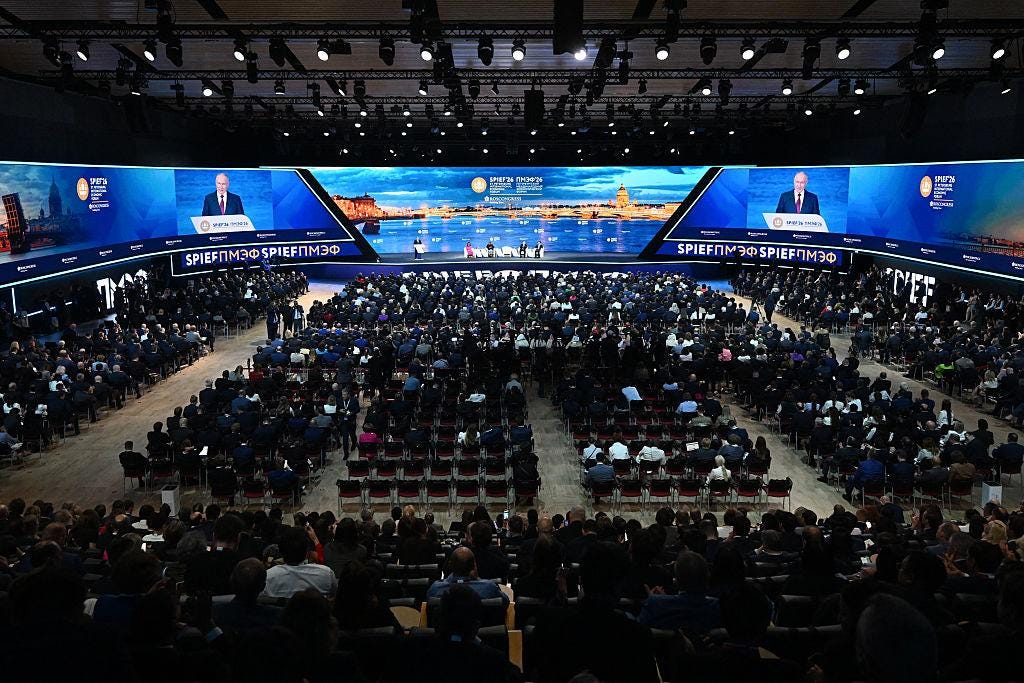
While Ukraine discussed negotiations, the Kremlin used its economic forum to repeat long-standing arguments about Ukraine and Russian identity.
The Question of Identity Remains Central
One passage in Shaun Pinner’s article deserves particular attention.
Putin again described Russians and Ukrainians as “one people”.
For many outside observers, this may sound like a historical argument.
For Ukrainians, it often sounds like something much more immediate.
If Ukraine is viewed as an independent nation, then negotiations become a discussion between equals.
If Ukraine is viewed as merely part of a larger Russian world, negotiations become something else entirely.
The difference helps explain why ceasefire proposals repeatedly struggle to gain traction.
The disagreement is not only about borders.
It is also about identity.
Russian Speakers Were Never Waiting to Be Rescued
Pinner writes from personal experience.
He is a Russian speaker. His wife is a Russian speaker. Many of his neighbours and friends are Russian speakers. Zelensky is a Russian speaker.
Mariupol, where he lost his home, was predominantly Russian-speaking before the invasion.
This points to one of the war’s deepest contradictions.
Russia says it came to protect Russian speakers.
Yet many of the cities that suffered the greatest destruction were places where Russian was widely spoken in daily life.
Mariupol.
Kharkiv.
Parts of southern and eastern Ukraine.
The language people spoke did not protect them from bombardment.
For many Ukrainians, the claim now carries little credibility because their lived experience points in the opposite direction.
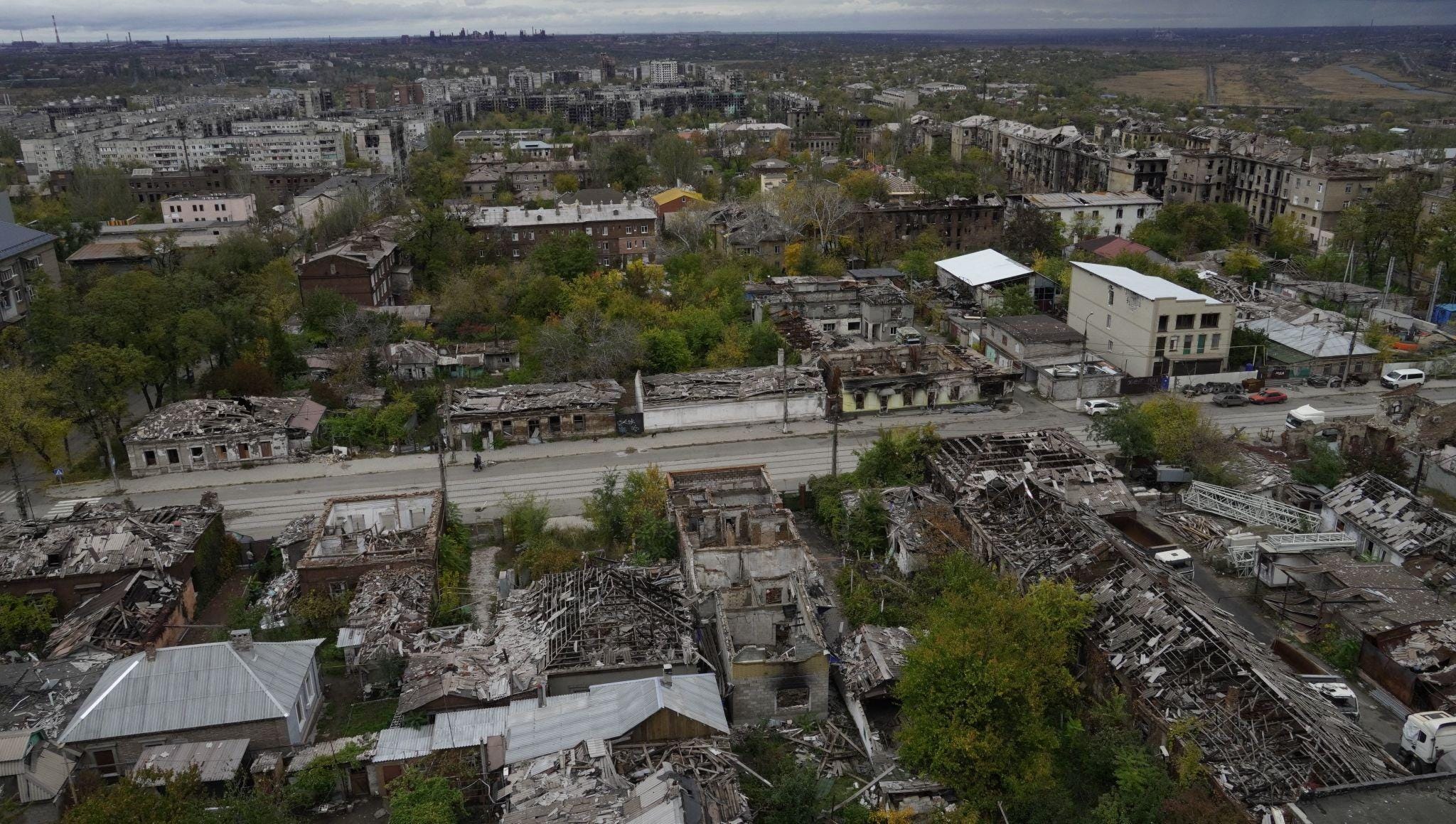
The image shows the devastation in Mariupol, a city in Ukraine that was severely affected by hostilities. It shows many buildings that are completely destroyed or severely damaged, which is characteristic of cities such as Mariupol and Bakhmut during the conflict. The image illustrates the massive loss of infrastructure and housing that has occurred in the affected areas of Ukraine
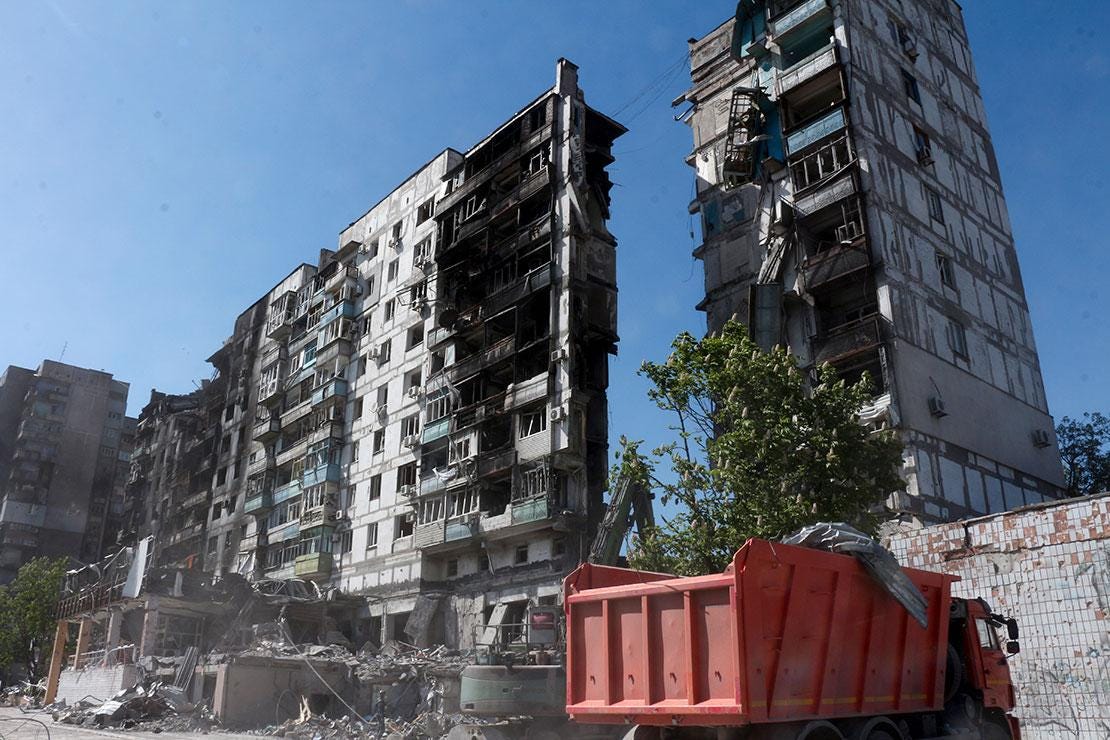
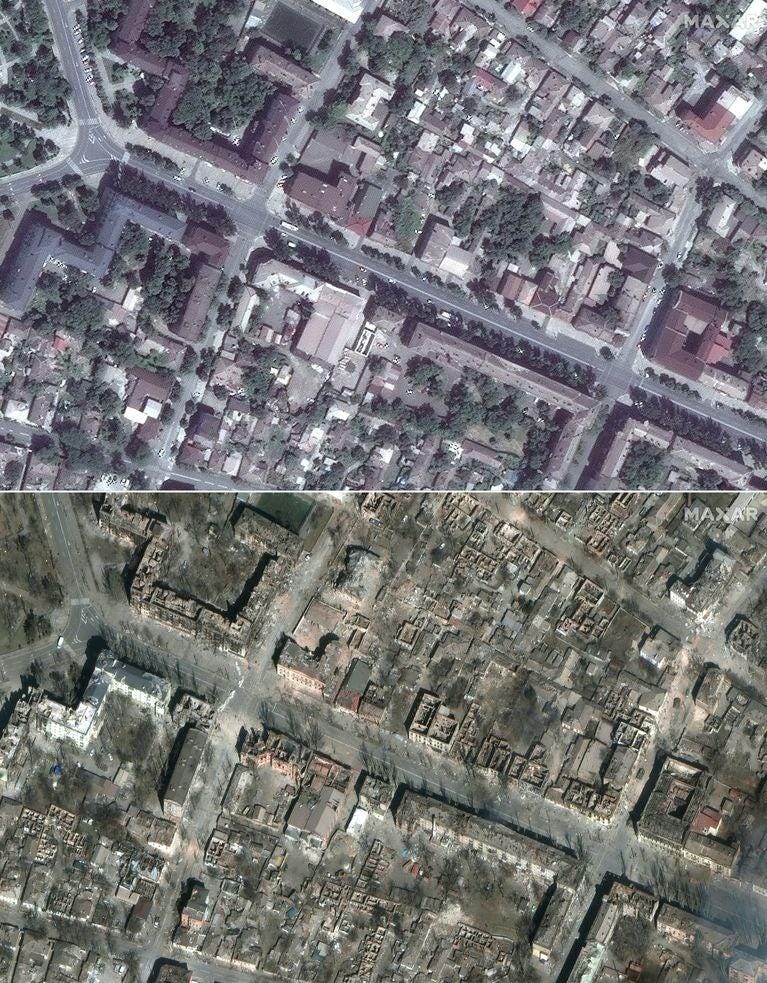
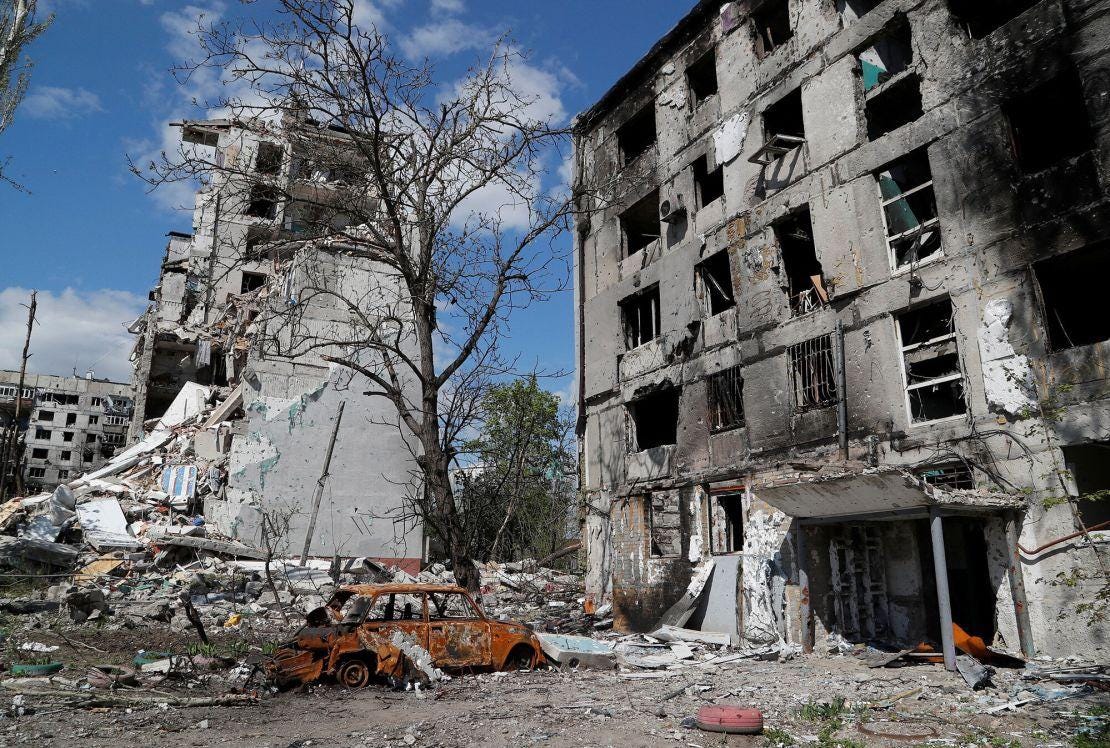
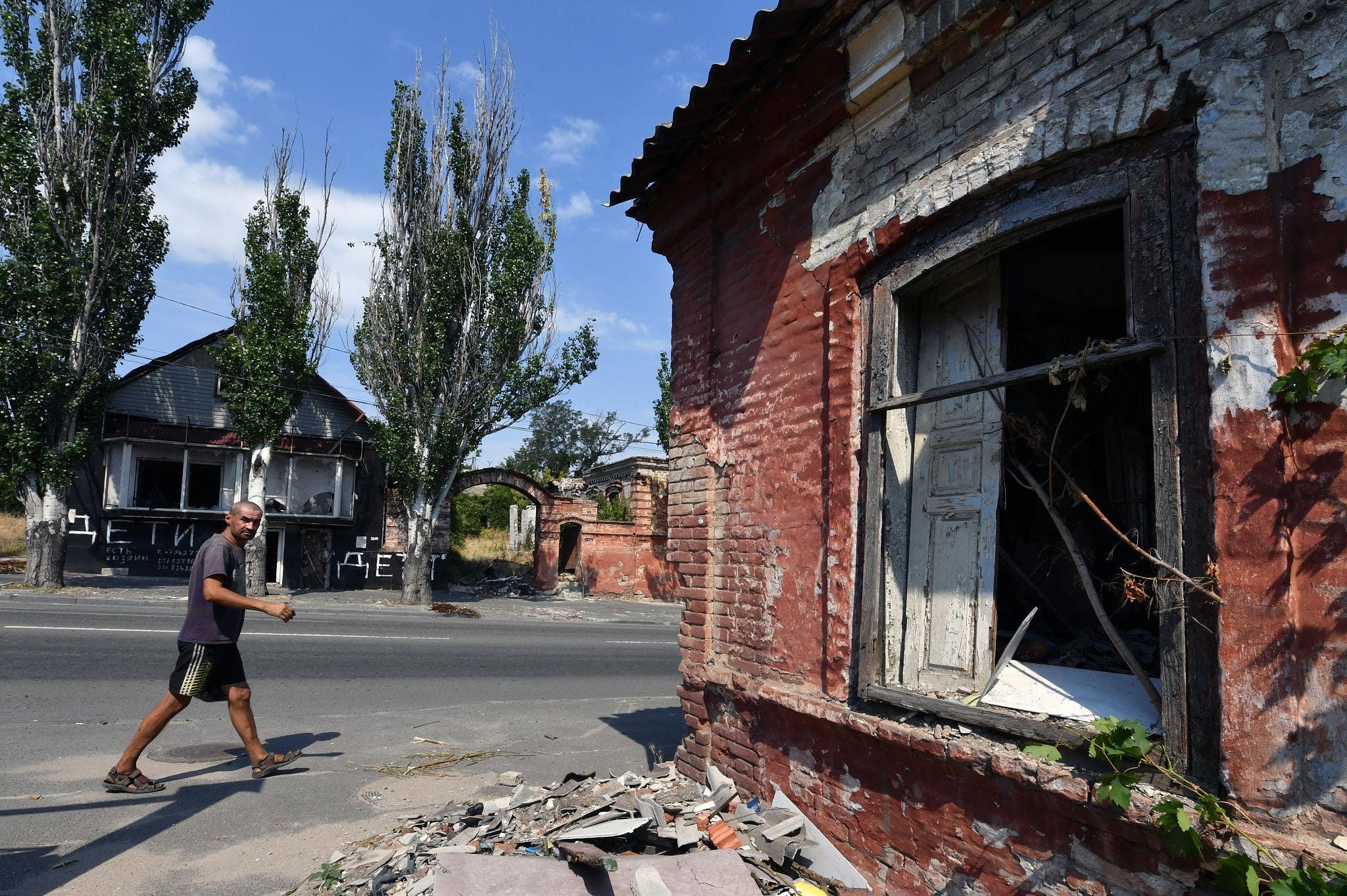
Mariupol became one of the clearest examples of the contradiction between the stated aim of protecting Russian speakers and the reality experienced by many Russian-speaking Ukrainians.
“The language people spoke did not protect them from the war.”
The War Has Changed. The Objectives Have Not.
Perhaps the most striking point is not what Russia has achieved.
It is what remains unfinished.
When the invasion began, many observers expected Kyiv to fall quickly.
Instead:
Ukraine remains independent.
Its government remains in place.
Its armed forces continue to fight.
Western support continues despite political debates and delays.
Russian forces still have not achieved several of their original political goals.
The war has become one of endurance rather than rapid conquest.
That reality creates an awkward question for the Kremlin.
If the objectives announced in 2022 have not been achieved after four years of war, what evidence suggests they are now closer than before?
The answer becomes harder to articulate as time passes.
The Cost of Narrative
Pinner also highlights another battlefield that receives less attention.
The battle over information.
Governments at war always attempt to shape public understanding.
Yet the longer a war lasts, the more difficult it becomes to keep reality aligned with official narratives.
Casualties accumulate.
Economic pressures emerge.
Families notice absences.
Questions begin to appear.
The challenge for any government is that lived experience eventually competes with official explanation.
History offers many examples where wars became harder to justify not because leaders changed their arguments, but because citizens increasingly measured those arguments against their own observations.
The Choice Facing Moscow
The significance of Zelensky’s proposal lies less in whether it would have succeeded and more in what happened afterwards.
An option was placed on the table.
Talks.
A ceasefire.
Humanitarian exchanges.
International involvement.
The Kremlin declined.
That decision inevitably shifts attention towards Moscow.
If negotiations are rejected, observers naturally begin asking what conditions would actually be acceptable.
Four years into the war, the answer appears remarkably similar to the position Russia held at the beginning.
That continuity may be one of the strongest indicators of how difficult a negotiated settlement remains.
Reflexions
Shaun Pinner approaches this subject from an unusual position.
He is neither a distant analyst nor a politician.
He is someone who lost a home in Mariupol, survived captivity, and continues to observe the war from close range.
That gives particular weight to his discussion of Russian-speaking Ukrainians.
One of the most persistent myths of the war has been that language determines loyalty.
The war itself has largely disproved that claim.
Millions of Russian-speaking Ukrainians have resisted Russia’s invasion.
Many serve in Ukraine’s armed forces.
Others have lost homes, relatives, livelihoods and communities.
The war has revealed that identity is often more complicated than language.
It has also revealed that military power cannot easily force people to accept a political identity they do not recognise as their own.
More than four years after the invasion began, that may be one of the most important lessons of the conflict.
Suggested Reading
My updated archive is systematised in (clickable) sections of relevant topics, under which you find my previous articles:

If this subject interests you, you may also wish to explore articles in these sections:
Thank you for reading.
The longer wars continue, the easier it becomes to focus only on maps, statistics and official statements. Yet behind every negotiation proposal and every rejected ceasefire stand millions of people waiting for an end to uncertainty. Keeping their experience in view remains one of the most important tasks for anyone trying to understand this war.
It’s free
However, if you find reason to support my research - I would be grateful for any contribution in the range of $2 to $8. You can support me too by leaving comments that I can navigate from in the future.
Some of my readers have asked me how to support my work. They are rarely covert to action. If the buttons don’t work, please tell me.
However, there are no restrictions. Everything is free and public.
Please do me the favour to restack.